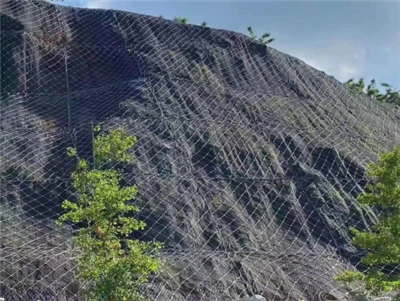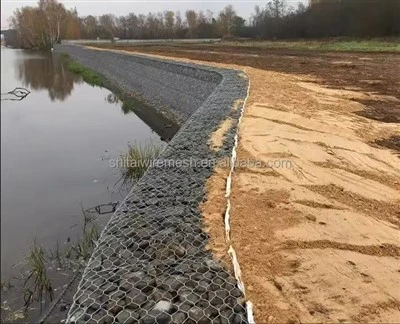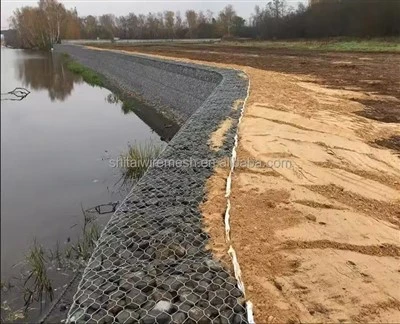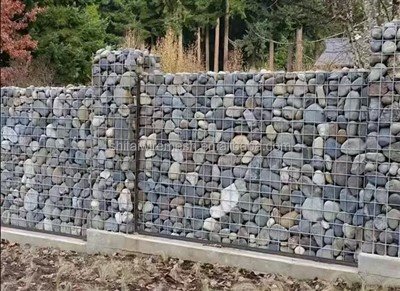
Hebei Shenyi Metal Products Co., Ltd. is one of the leading manufacturers and suppliers of knotted gabion in China. If you're going to wholesale bulk knotted gabion made in China, welcome to get free sample from our factory. All customized metal products are with high quality and competitive price.
Common Specifications
Mesh size: 60×80mm, 80×100mm, 100×120mm, 140×160mm
Standard unit dimensions: 2×1×1m, 4×1×1m, 2×1×0.5m; custom sizes available upon request
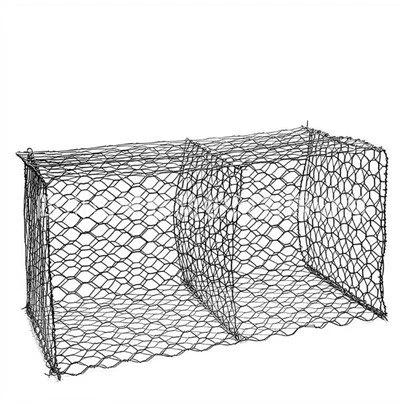
Structure: Internal diaphragms divide the unit into compartments, preventing deformation caused by localized stone accumulation
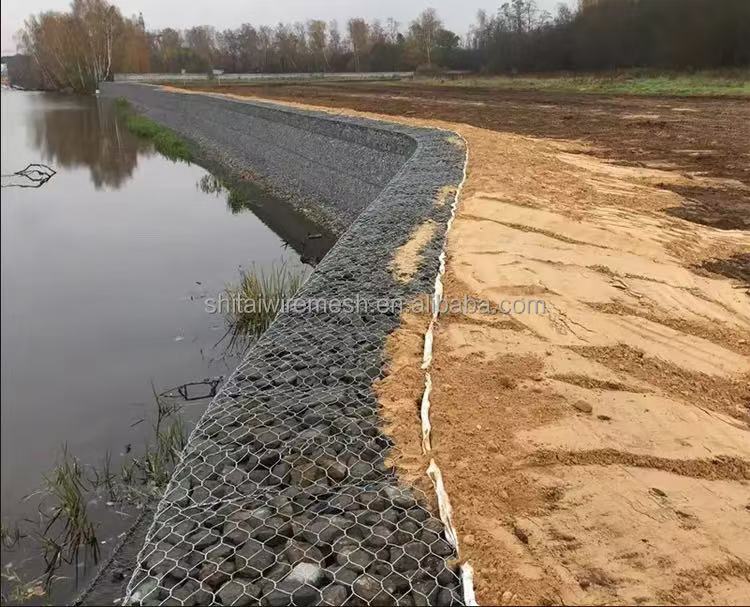
Reno Mattress: Flat, low-profile gabion (height: 0.15–0.3m), designed specifically for riverbed lining and erosion protection
Usage Precautions
Site and Foundation Preparation
Before installation, properly grade the slope and ground surface; preserve the original terrain as much as possible and avoid significant irregularities.
Ensure the foundation is level and compacted to prevent uneven settlement.
The foundation must meet the specified design elevation and slope requirements.
If geotextiles are used, take care during installation to avoid damage.
Material Inspection
Verify that the gabion mesh aperture size and wire diameter comply with design specifications.
Select durable, weather-resistant rock for the fill; the use of weathered stone is strictly prohibited.
Match the stone particle size to the mesh aperture-the aperture size must be smaller than the smallest fill stone to prevent stones from spilling out.
Typical diameter range for fill stones: 100–250 mm or 80–200 mm.
Cage Assembly
Unfold the mesh cage units-transported to the site in a folded state-on level ground and flatten any creases.
Erect the front and rear panels, base panel, and diaphragms to form the cage shape specified in the design.
Secure the four corners of the cage using binding wire or metal fasteners.
Lace adjacent edges tightly with binding wire, maintaining a spacing of no more than 50 mm.
Inter-layer and Inter-unit Connections
Stagger the joints between upper and lower layers of gabions to avoid continuous vertical seams.
Securely bind newly installed cages to the underlying cages along their frames.
Firmly bind adjacent cages within the same layer to one another.
Use double-twisted binding wire (diameter ≥ 2.5 mm) for all connections, with a spacing of ≤ 200 mm.
Uniform Layered Filling
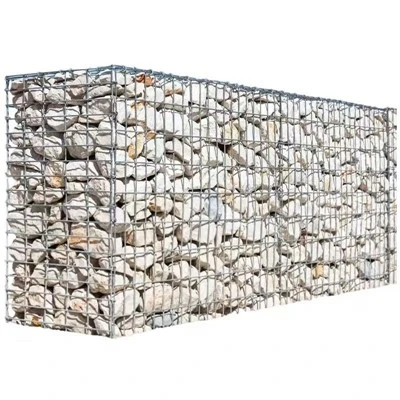
Materials must be placed evenly across all compartments of the same layer simultaneously; filling a single compartment completely in one go is strictly prohibited.
A layered filling method shall be used, with each layer approximately 300 mm (30 cm) thick.
The difference in stone-fill height between adjacent gabions (including adjacent compartments within the same gabion) shall not exceed 35 cm.
Stones with a particle size of at least 10 cm must be hand-placed on exposed faces to ensure an aesthetically pleasing appearance.
Filling Density
The stone fill must be compact; after filling, the material should extend approximately 2.5–3 cm above the top of the gabion unit to allow for settlement.
The stone material must meet the design density requirements (generally ≥1.7 t/m³).
Care must be taken to avoid damaging the mesh panels or the underlying geotextile during the filling process.
Capping Operation
Perform capping in a single operation after filling is complete.
Securely connect the cover panel to the edges of the basket unit using binding wire.
Special Requirements for Retaining Wall Construction
Backfill behind the wall promptly after the completion of each retaining wall layer.
Ensure the backfill surface is level with the top of the gabion units and that the backfill material is compacted.
Periodic Inspections
Conduct regular visual inspections, focusing on transition zones for signs of scouring or excessive erosion.
Inspect the mesh panels for damage, corrosion, or abnormal deformation.
Hot Tags: knotted gabion, China knotted gabion manufacturers, suppliers, factory, Flood Protection Gabion, Galvanized Gabion, Hexagonal Gabion, Knotted Gabion, Landscape Gabion, Welded Gabion