

Hebei Shenyi Metal Products Co., Ltd. is one of the leading manufacturers and suppliers of mesh cable tray in China. If you're going to wholesale bulk mesh cable tray made in China, welcome to get free sample from our factory. All customized metal products are with high quality and competitive price.
Key Features
High-Quality Wire Mesh Construction
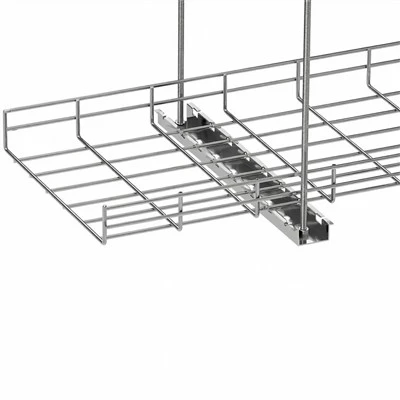
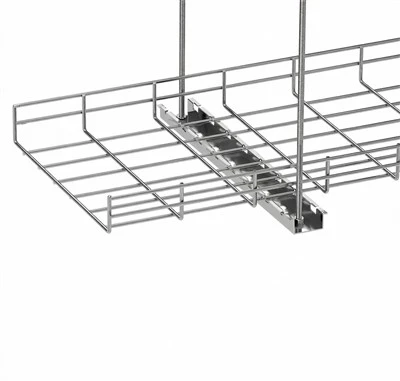
The mesh cable tray is made of premium carbon steel or stainless steel wires of 3–6 mm diameter, with surface treatments such as electro‑galvanizing, hot‑dip galvanizing, or powder coating, providing excellent tensile strength and corrosion resistance. The mesh openings are regular and uniform, making the overall structure lightweight yet robust. This open‑grid design reduces material consumption and self‑weight under the same load capacity, which lowers requirements for support hangers and reduces installation labor intensity.
Optimized for Data Communication Cables
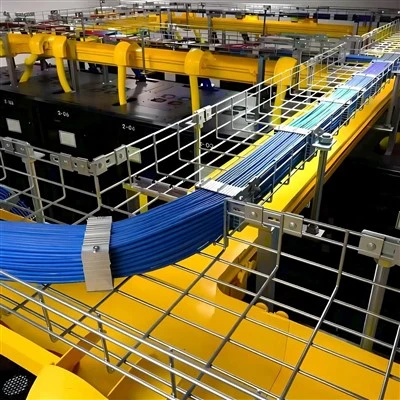
Modern data centers, telecom rooms, and building weak‑current shafts extensively use small‑diameter cables such as Cat6/Cat6a/Cat7 Ethernet cables, fiber optic patch cords, and coaxial cables. These cables are sensitive to bending radius, compression, and friction. The mesh basket of the cable tray provides a continuous and uniform supporting surface, effectively preventing cable sagging or excessive bending, thus ensuring signal integrity. Meanwhile, the mesh spacing (typically 50×100 mm or finer) prevents small cables from falling through the gaps, making it particularly suitable for high‑density cabling environments.
Superior Ventilation and Heat Dissipation
Enclosed trays (e.g., solid‑bottom trays) tend to trap heat generated by cables. Prolonged high‑temperature operation accelerates insulation aging, increases signal attenuation, and may even raise fire risks. The open mesh structure of the wire mesh cable tray allows air to circulate freely around the cables, enabling natural convection cooling. Whether installed horizontally or vertically, hot air dissipates promptly, keeping cable operating temperatures within safe limits. This characteristic is especially critical when bundling a large number of data cables – it effectively prevents "heat island" effects, significantly reduces the risk of thermal damage, and extends system service life.
Smooth Mesh Surface for Cable Protection
During pulling and installation, cables are most vulnerable to being scratched by burrs, weld points, or sharp edges on tray surfaces, which could cause insulation damage, short circuits, or signal interference. In the manufacturing of mesh cable trays, every intersection and cut edge is specially treated to ensure a smooth, burr‑free routing surface. The mesh surface is flat with rounded edges, so cables will not be cut, worn, or crushed during installation. In addition, the grid structure facilitates fast cable fixing using nylon cable ties or Velcro straps, without creating stress concentration points – further protecting delicate data cables.
Flexible Installation and Easy Future Expansion
Mesh cable trays offer exceptional on‑site adaptability. Common cutting pliers can be used to cut the tray to required lengths or adjust widths on demand. Using dedicated accessories such as connectors, elbows, tees, and crosses, installers can easily build horizontal straights, bends, vertical drops, T‑branches, and other routing shapes. For scenarios where new cables must be added to an already operational system, simply open existing ties, insert the new cable through any convenient mesh opening, and secure it – without dismantling the tray or interrupting existing lines. This "open‑maintenance" feature greatly reduces the time and cost of future expansion.
Lightweight and Aesthetic Appearance
Compared with conventional solid‑bottom or channel trays, mesh cable trays reduce self‑weight by approximately 50%–70%. When installed above suspended ceilings or on top of equipment racks, they impose minimal load on building structures. Moreover, the neat, uniform grid pattern presents an industrial aesthetic style, commonly seen in modern data center open‑display areas, combining function with visual appeal. With white or black epoxy coatings, mesh trays blend well with various interior decoration styles.
Typical Applications
- Data centers (overhead cabling above server racks and under raised floors)
- Telecom rooms and base stations (patch cord management between switching and transmission equipment)
- Intelligent buildings (weak‑current shafts, horizontal cabling in ceiling spaces)
- Industrial automation control panels (cable routing for PLCs, variable‑frequency drives)
- Laboratories and test environments (locations requiring frequent cabling changes)

Conclusion
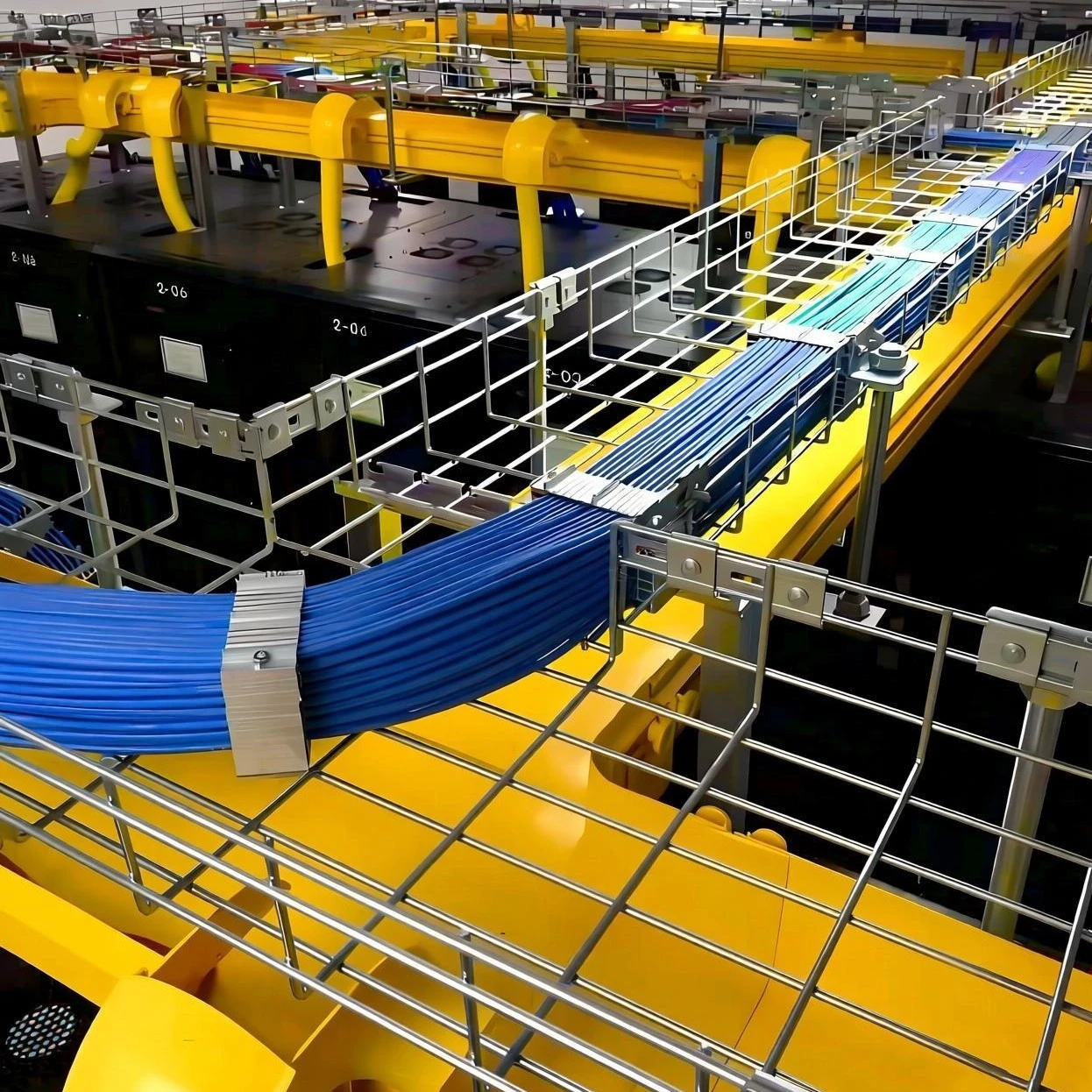
- In summary, the mesh cable tray – with its unique wire mesh basket structure – perfectly addresses the pain points of supporting, cooling, and protecting small‑diameter data cables.
- It is not just an alternative to traditional cable trays; it is an advanced infrastructure designed for modern cabling environments characterized by high density, high heat dissipation requirements, and high flexibility.
- Choosing a mesh cable tray means you will benefit from longer cable life, more stable network performance, and lower total cost of ownership.
Hot Tags: mesh cable tray, China mesh cable tray manufacturers, suppliers, factory, Fire Resistant Mesh Cable Tray, Heavy Duty Mesh Cable Tray, Low Voltage Wire Mesh Tray, Mesh Cable Tray, Wire Mesh Cable Channel, wire mesh cable tray